ImageboxSite LogoLeft ArrowPrevious ItemNext ItemRight ArrowBlog PostEventGrowIgniteLaunchLocationXMenuQuoteSearchGoogle PlusYoutube
New Sun Rising
Menu
Close
  • How We Work
    • Overview
    • Impact Areas
    • Development Phases
  • Capacity Building
    • Nonprofit Resilience Program
    • Sustainable Futures Initiative
    • Learning Resources
  • Accessible Funding
    • Fiscal Sponsorship
    • 250 Tables
    • Community Grantmaking
  • Data + Advocacy
    • Vibrancy Portal
    • Virtual Support Center
    • Community Voice
    • Creative Advocacy
  • Spaces
    • Food + Energy Hub
    • Solar Garden Patio
  • Home
  • Blog
  • Projects We Support
  • About Us
    • Team
    • We Stand Against Racism + Discrimination
    • We Hear You
    • History
    • Jobs + Opportunities
  • Contact
  • Make a Donation
New Sun Rising
  • Home
  • Blog
  • Projects We Support
  • About Us
    • Team
    • We Stand Against Racism + Discrimination
    • We Hear You
    • History
    • Jobs + Opportunities
  • Contact
  • Search
  • Make a Donation
  • How We Work
    • Overview
    • Impact Areas
    • Development Phases
  • Capacity Building
    • Nonprofit Resilience Program
    • Sustainable Futures Initiative
    • Learning Resources
  • Accessible Funding
    • Fiscal Sponsorship
    • 250 Tables
    • Community Grantmaking
  • Data + Advocacy
    • Vibrancy Portal
    • Virtual Support Center
    • Community Voice
    • Creative Advocacy
  • Spaces
    • Food + Energy Hub
    • Solar Garden Patio
The Blog of NSR

Author: Alyse Horn

Bridging the Gap: Community leaders strengthen Pittsburgh’s food system with New Sun Rising’s support
Posted on April 27, 2026 by Alyse Horn

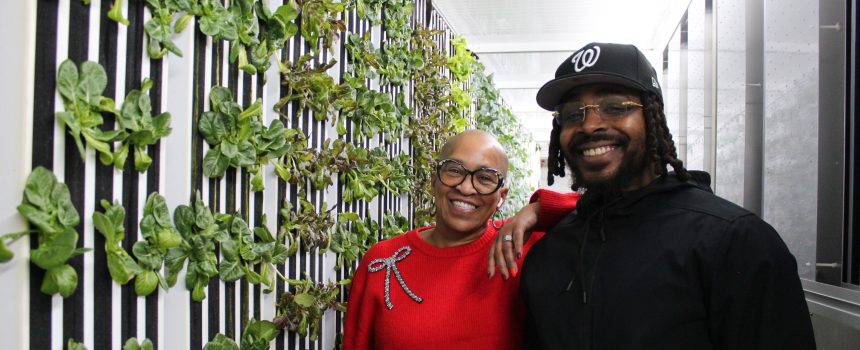
Terri Minor-Spencer, founder and president of West End P.O.W.E.R, and Tacumba Turner, Freight Farm Program Manager, stand next to lettuce growing on a panel inside of the freight farm. (Photo by Alyse Horn, New Sun Rising).

Nestled next to the Community of Change Center on Centralia Street in the West End sits an unassuming white freight container.

Inside, the 320-square-foot metal structure houses a drip irrigation hydroponics system that grows 2,500 pounds of produce annually. The plants grow vertically on mobile panels that hang from the ceiling with nutrient-rich water that is plumbed overhead and, with a little help from gravity, drips down the panel to the plants’ roots.

Managed by West End P.O.W.E.R., the freight farm received a Food Justice Fund (FJF) Grassroots Grant to pilot Growing Justice, a system expansion to increase year-round production of fresh vegetables. They’re also hosting educational programming around healthy food, and engaging groups of youth and formerly incarcerated individuals in job training through roles in farm maintenance, harvesting and food distribution.

“There are domino effects to not having healthy foods to eat,” said Terri Minor-Spencer, founder and president of West End P.O.W.E.R. “I want this conversation to be more tied together with how the choices that we make have a lot to do with what we put in our bodies.”

The City of Pittsburgh released FJF grants in two rounds. The first, launched in 2024, was for large-scale food system investments and $1.1 million was awarded. The second, launched in 2025, was for grassroots organizations with a budget of $500,000 or less. In September, a total of 30 local food justice nonprofits were awarded $1.5 million.

New Sun Rising (NSR), a nonprofit focused on supporting vibrant communities, is managing distribution of those funds. They serve as an operating system for community-driven development by providing leaders with skills, funding, connections and data to overcome the challenges of our time.

“These 30 grantees know what their communities need and how to provide it. NSR’s role in this program aims to fill the spaces between funder requirements and grantee resources,” said Judi Costanza, director of vibrancy funds at NSR.

To support multiple food pantries in her native North Side of Pittsburgh, Jana Thompson saw the grant as an opportunity to fill gaps in food distribution infrastructure that often gets overlooked. Her project, Moving Food: The Last Mile, is providing 6,000 bags, 55 backpacks and 200 wheeled personal buggies to pantry clients who do not have access to personal transportation. Thompson said the majority of those who utilize the pantry are elderly or disabled. Providing people with the capability or choice for how they transport their food means they can get it home safely.

“I’m on the ground watching people struggle to get here and struggle to get on the bus. They’ve got everything wrapped in little plastic bags and they’re trying to be particular about how they put it in this bag, but what’s this going to look like when they get home? They deserve to have that tomato look good,” Thompson said.

To apply for the FJF Grassroots Grants, organizations needed to be 501(c)(3) nonprofits or unincorporated groups represented by a fiscal sponsor. Thompson said she had a fiscal sponsor when she applied, but the rigor of managing government funds made the arrangement impractical.
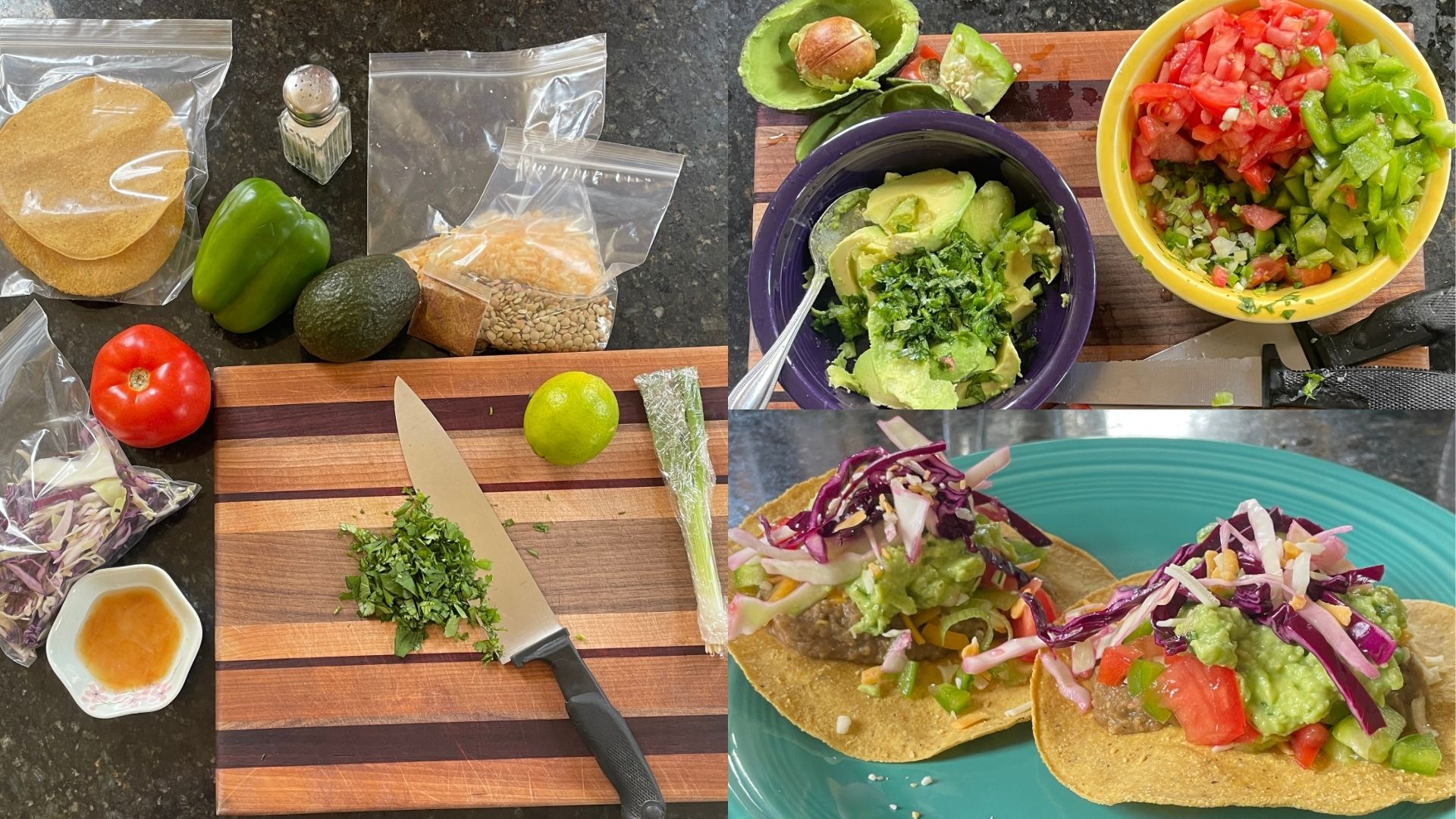
Volunteers for Garfield Eats at Isaiah’s Kitchen made meal kits for families to take home and cook for themselves, each equipped with instructions and necessary ingredients to feed two people. (Photo courtesy of Garfield Eats at Isaiah’s Kitchen)

At the brink of returning the grant, NSR stepped in to serve as fiscal sponsor for the project and “caught me when I was in free fall,” Thompson said.

For the FJF, NSR is fiscally sponsoring five projects. Rooted in community work and a deep appreciation for grassroots solutions, NSR has partnered with local communities for 20 years to provide grant administration for mission-aligned projects.

“As an intermediary, NSR flexes in the space between top-down institutional funding programs and intelligent and insightful bottom-up grassroots community programs,” NSR’s Costanza said.

Maintaining accountability and transparency in the use of public funding is critically important. Community members and food advocates can follow the social and economic impact of the $1.5 million grassroots grant investments by visiting the FJF dashboard created by NSR.

The city expects to open the second round of applications for the FJF Grassroots Grant in May 2026.

To learn more about New Sun Rising, visit https://www.newsunrising.org/.

This article first appeared on Pittsburgh’s Public Source and is republished here under a Creative Commons Attribution-NoDerivatives 4.0 International License.
Posted in Featured

Responsive planning, evidence-based learning advance long-term strategic goals

Posted on January 6, 2026 by Alyse Horn

Photo: Storyburgh

Grounded in the belief that communities are dynamic, living systems, New Sun Rising has dedicated the last 20 years to support community leaders with skills, funding, connections, and data to overcome the challenges of our time. 

But what does that mean, and how do we guide our approach to accomplish these outcomes? 

In 2023, NSR started to develop our Adaptive Strategic Planning Tool. It gives us a quarterly process to review what’s happening now while staying flexible about the best way to reach our long-term goals.

Guided by Michelle Walker, principal at Walker Philanthropic Consulting, we started with a shared vision for the future and asked ourselves, “Twenty years from now, if New Sun Rising were to be totally successful in delivering on our mission, what would that look like?”

Walker said this order of operations is opposite from most strategic planning processes, which tends to start with current data and a variety of tools on how to improve those data points, “but when you can articulate the future, you can more readily chart a past that leads to the preferred outcome.”

In short, we envisioned a future where all communities are vibrant places of culture, sustainability, and opportunity.  By serving as a bridge between institutional investment and locally-led development, NSR is helping the transition away from an extractive economy that harms people and the environment, to one where local prosperity and well-being strengthen the quality of life for current and future generations. 

“I saw the team really rolling up their sleeves and saying, ‘Well, if this is the future we’re describing, what are the priorities, goals, and objectives that will actually get us to that future? What needs to be tracked and measured?’” Walker said. 

Throughout our adaptive strategic plan, we’ve set goals and measures of success, understanding that these metrics may change if we find that they are not supporting our intended outcomes. NSR’s commitment to measurement, evaluation, and learning ensures that activities are evidence-based, informed by those actively doing the work, and contribute to advancing knowledge and innovation for the social sector. 

Daniel Rossi-Keen, director at Riverwise and board chair during the initial planning process, said unlike a traditional strategic plan, NSR’s establishes a high-level framework that guides and evaluates our organization’s work while still allowing substantial flexibility for growth, adaptation, and responsiveness to the needs of both NSR and the many organizations we support. 

A challenge for NSR, Rossi-Keen said, was that due to NSR’s innovative nature to pursue new projects, partnerships, and processes, we needed to ensure that our planning efforts did not become “unrealistically ambitious or too rigid,” making them misaligned with the organizations’ day-to-day operations.

“Recognizing this, we wanted to be sure that the strategic planning process we undertook was in line with the organization’s culture and future needs,” Rossi-Keen said. “We didn’t want to create a timebound and static plan that would have limited utility for the future. Therefore, we chose an adaptive strategic planning process that balanced both clarity and flexibility.”

The NSR Adaptive Strategic Plan is a living document, and like every initiative, we strive to center social, environmental, and economic well-being at its heart. To read it in full, view the document below. 

NSR Adaptive Strategic Plan (2025) (1)
Posted in General Information

Reflecting on Two Transformative Years at Energy Efficiency Empowerment (E3)

Posted on December 19, 2025 by Alyse Horn

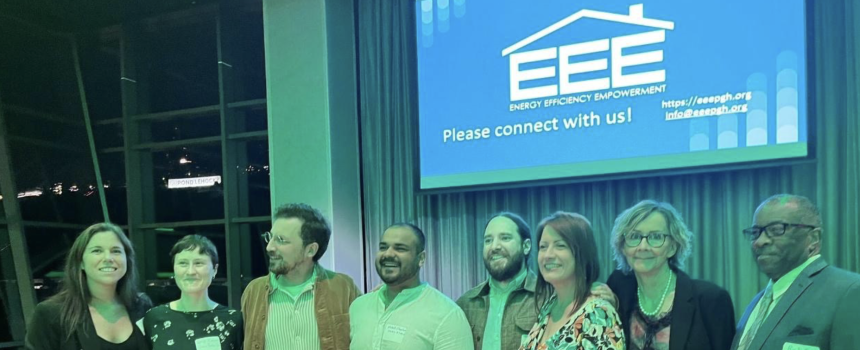
E3 partners, including City of Bridges, Hilltop Alliance, Pittsburgh Housing Development Corporation, Sharpsburg Neighborhood Organization and Rebuilding Together Pittsburgh gather for a photo to Excellence in Sustainability achievements during Energy Efficiency- A win for Affordable Housing on Sept. 25, 2025 at River’s Casino. Partners not pictured include Hazelwood Initiative, East Hill Consensus Group, Mincin Insulation, New Sun Rising, and Rising Tide Partners.

By Lucyna (Lucy) de Barbaro, Ph.D. 
Director and Founder of Energy Efficiency Empowerment

In 2022-23, I never envisioned being able to bring almost $1 million in funding to realize the ideas that had been percolating in my mind. I recognized the pressing need for improved energy efficiency in affordable housing rehabilitation—a mission that needed a champion. It’s truly amazing to reflect on how far we’ve come in actualizing part of that quest. As I look back on this journey, I’m filled with gratitude and pride for what we have accomplished together. This retrospective aims to celebrate our achievements, acknowledge the challenges we faced, and share the lessons learned along the way.

Pittsburgh has hundreds of homes in need of rehabilitation. Many are structurally sound but perform poorly from an energy standpoint due to air leakage, insulation gaps, aging systems, and inconsistent construction practices. These homes can become efficient, but without targeted interventions during rehab, the opportunity often slips past. The long-term consequences fall on future residents—who face unnecessarily high utility bills—and on the region, which misses chances to reduce carbon emissions.

To help close this persistent gap, I created Energy Efficiency Empowerment (E3), a small nonprofit fiscally sponsored by New Sun Rising, with a mission to improve homes by sharply reducing the energy needed for heating and cooling—cutting carbon emissions while supporting disadvantaged communities. With the Phase 1 and Phase 2 awards of the Buildings Upgrade Prize from the Department of Energy in 2023 and 2025, we were able to grow, adding two staff members with project management and energy-auditing expertise, and begin the program in earnest.

E3’s nonprofit developer partners, who joined us as members of the E3 Buildings Upgrade Team, are the heavy lifters of home rehabilitation. They fundraise from various sources, select properties, collaborate with communities where the work takes place, and manage the entire rehabilitation process— from procuring architectural and engineering services to managing inspections and interacting with contractors. They also play a crucial role in matching low- to moderate-income families with newly rehabbed homes. This monumental work alleviates some of the pressures surrounding the availability of affordable housing in our region, and E3 considers itself fortunate to partner with these dedicated organizations and individuals.

In the projects where we collaborated, every home was measured and received customized recommendations for enhanced enclosure improvements, equipment decisions, and air-sealing priorities. Beyond reducing energy use, we aim to enhance resilience and comfort, maximize long-term affordability, and protect residents’ health. Our interventions occur at the most cost-effective stage of the rehabilitation process, often filling gaps left by insufficient funding. Whether it’s waterproofing a basement or providing wall and attic insulation, we strive not to leave any stone unturned.

For each home, we model full heating and cooling loads to ensure the selected HVAC equipment is properly matched to the building, which is crucial for both comfort and efficiency. Our approach involves studying the suitability of new technologies, like cold-climate heat pumps, and utilizing the best tools and practices when selecting equipment.

Notably, E3 has developed a custom approach for predicting utility costs when using heat pumps. Both E3 and our partners are equally motivated to keep utility costs low for families while embracing new technology, leading us to scope dual-fuel systems: heat pumps covering approximately 50% of the heating load and the entirety of the cooling load at much better efficiency than traditional equipment.

However, many small details matter— even the shape and size of duct work and its placement within the building can significantly impact efficiency. We thrive on solving these challenges and finding contractors willing to engage in such tinkering to advance our shared goals. We also use the Home Energy Score to create a common performance metric, ensuring that the improvements achieve their intended results. Performance tracking has become a consistent expectation across our partnerships.

In our first two years, E3 has:

  • Completed 15 energy-efficiency enhancements in vacant homes undergoing rehabilitation.
  • Installed 14 heat pump water heaters in occupied homes across partner communities.
  • Conducted 21 energy audits for households seeking lower bills and improved comfort.
  • Fixed 2 attics through air sealing and improved insulation—a type of work we are just beginning to scale up.

Across the completed vacant home rehabs, the measured outcomes are compelling:

  • E3 provided an average of $15,000 in additional efficiency enhancements to each project.
  • These enhancements delivered an additional 27% annual energy savings beyond our partners’ own measures and reductions.
  • Combined partner and E3 actions generated approximately $450 in annual utility bill savings for future residents—achieved without increasing sale prices or rents.

A graph with red and blue dots

AI-generated content may be incorrect.

As illustrated in our data, when we work together we have systematically lowered the predicted utility costs. These results validate our core premise: with the right methods, a little extra funding, and dedication from all involved, energy efficiency can be consistently embedded within affordable housing rehab. Included in the graph are five all-electric homes with heat pumps covering the entirety of the heating load, where E3 facilitated the installation of solar arrays averaging 3.5 kW to reduce high utility costs by about $800 annually.

With climate change progressing inevitably, we anticipate heavier rains, hotter heat waves, and worsened air quality—impacts that will weigh most heavily on Pittsburgh’s lower- to middle-income populations, particularly those living in areas burdened by industrial pollution and compromised housing. We urge all to recognize the dual duty of climate mitigation (reducing emissions) and adaptation (better air sealing: protection from polluted outdoor air, better insulation: thermal protection, moisture protection, and so on)  as we plan how to help everyone thrive in our city.

Partnerships have been the engine of our progress, and we acknowledge and celebrate Rebuilding Together Pittsburgh, City of Bridges CLT, Hilltop Alliance, Pittsburgh Housing Development Corporations, Rising Tide Partners, Hazelwood Initiative, East Hills Consensus Group, Sharpsburg Neighborhood Organization, New Sun Rising and Mincin Insulation.

We also want to acknowledge The Heinz Endowments for stepping in to provide critical grant support after Phase 2 funding from the Buildings Upgrade Prize was unjustly frozen in January 2025. Their support enabled E3 to maintain operations and pursue legal action. Represented by Fair Shake Environmental Legal Services, and additional backing from Congressman Chris Deluzio, Lawyers for Good Government, and the Environmental Protection Network, E3 successfully secured the release of the funding, enabling us to plan more projects in 2026.

After two years of work on home performance improvements, several lessons stand out:

  • Efficiency must be integrated early in scope development to avoid missed opportunities.
  • Measurement builds credibility—for homeowners, funders, and developers alike.
  • Affordability and sustainability can reinforce each other with the right interventions.
  • Attention to detail and quality assurance are indispensable for building good rehabilitation practices and eventual scaling.

These insights now shape how we plan, evaluate, and communicate our work. Two years in, E3 has demonstrated that good building science, applied thoughtfully, makes homes more resilient, affordable, and equitable. Our results are measurable; the foundation is strong, but the work ahead—integrating performance into every affordable rehab in the region—remains very ambitious.

Posted in General Information

$750,000 grant to New Sun Rising will help nonprofits Ignite, Launch, Grow

Posted on December 9, 2025 by Alyse Horn

The funding will support regional community leaders through capacity building, accessible funding, data advocacy

Pittsburgh, PA — New Sun Rising has received a $750,000 grant from Henry L. Hillman Foundation to be distributed over three years, to provide capacity building services to regional nonprofits and communities.

Through its strategically diverse portfolio, New Sun Rising (NSR) empowers local communities to reverse cycles of disinvestment and promote inclusive regional growth. Since 2020, NSR staff and its network of close partners have demonstrated success through:

  • Ignite activities that engaged 19,000 people and hosted development workshops for 225 nonprofit and small business leaders.

  • Launch cohorts that strengthened organizational effectiveness of 250 organizations and well-being of 80 leaders, responsibly managed $14 million in fiscal sponsorship funding, $4.1 million in community regranting programs, and $1.5 million in revolving loans.

  • Grow activities that build collaborative infrastructure, including shared staff (Shared Financial Services), networks (Triboro Ecodistrict, Grow Sto-Rox, District PGH), technology (Vibrancy Portal), spaces (38,900 sq. ft. commercial development), and joint fundraising.

“Stronger nonprofits and small businesses are critical to improving our regional well-being,” said Scott Wolovich, Executive Director at New Sun Rising. “We are excited to build upon our decade-long partnership with Henry L. Hillman Foundation to drive community-driven growth rooted in collaboration and social innovation.”

Since 2005, NSR has supported 500+ nonprofits, social enterprises, and funders to invest $20+ million in projects that develop Vibrant Communities across 75 neighborhoods in the Greater Pittsburgh region.

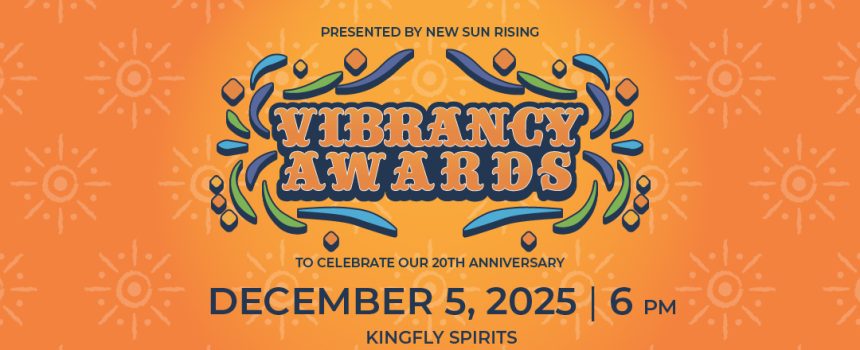
On Friday, December 5, NSR will host their 20th Anniversary Vibrancy Awards. With remarks by County Executive Sara Innamorato, this will be a celebration of its two decades of impact and will recognize individuals, projects, and organizations that exemplify what it means to build sustainable, equitable, and resilient communities.

About New Sun Rising: New Sun Rising envisions a future where all communities are vibrant places of culture, sustainability, and opportunity. NSR supports community leaders with the skills, funding, connections, and data to overcome the challenges of our time.

###

Posted in General Information

New Sun Rising announces 2025 Vibrancy Award Winners

Posted on November 26, 2025 by Alyse Horn

Community leaders & NSR’s 20th Anniversary to be celebrated on December 5

Pittsburgh, PA — The New Sun Rising 20th Anniversary Vibrancy Awards will be held at 6 p.m. on Friday, December 5 at Kingfly Spirits with remarks by County Executive Sara Innamorato.

The Vibrancy Awards recognize individuals, projects, and organizations that exemplify what it means to build resilient and equitable communities. This year, New Sun Rising (NSR) will be awarding three alumni from the Nonprofit Resilience Program (NRP) in the categories of Culture, Sustainability, and Opportunity, including: Aquene Watkins-Wise (Culture) of Royally Fit, Raynise and TaRay Kelly (Sustainability) of Soil Sisters Plant Nursery, and Jasimine Cooper (Opportunity) of Landforce. Each awardee will receive a cash award.

“The Vibrancy Awards take on special significance in New Sun Rising’s 20th year,” said Justin Romano, Board Chair for NSR. “The throughline of the last two decades has been collaboration with leaders like Aquene, Raynise, TaRay, and Jasimine who are a driving force behind positive change in their communities.”

A silent auction is open for bidding through December 7 with proceeds supporting The Wellness Fund, which will provide mini-grants to NRP alumni and fiscally sponsored projects to implement self-care, well-being, or resilience programming. 

“It’s important to recognize the hard work and dedication of the individuals and organizations serving our community, and too often their efforts go unnoticed,” said Jamie Johnson, Director of Programs at NSR. “Prioritizing self-care and well-being is an ongoing process, yet funding for this vital work is frequently limited. We hope to help those we serve by providing access to funds dedicated to these programs, and we encourage others to do the same.”

New Oreleans-inspired fare, catered by Bouji Bites, will be served as a nod to NSR’s history. NSR’s inaugural fundraiser in 2005, the Cultural Gumbo, was created to support flood-impacted communities in Millvale and New Orleans following Hurricanes Ivan and Katrina. Music by DJ NiX P. General admission tickets are $30 and include two drinks.

For two decades, NSR has supported 500+ nonprofits, social enterprises, and funders to invest $20+ million in projects that develop Vibrant Communities across 75 neighborhoods in the Greater Pittsburgh region.

About New Sun Rising: New Sun Rising envisions a future where all communities are vibrant places of culture, sustainability, and opportunity. NSR supports community leaders with the skills, funding, connections, and data to overcome the challenges of our time. 

###

Posted in Events

NSR supported projects harness the power of culture, creating space for healing and connection

Posted on November 6, 2025 by Alyse Horn

Above: Participants of Building Bridges Day 2025 pose for a photo on the Roberto Clemente Bridge with founder Ebtehal Badawi (center). Photo courtesy of Ebtehal Badawi.

For the last several years on a Saturday in August, the Roberto Clemente Bridge has closed down to host hundreds of people for Building Bridges Day, an event that promotes unity and connection among all individuals, regardless of their background or differences. 

The day includes a variety of activities that celebrate global cultures through mural painting, performances, community dialogue, and live music. This year, founder Ebtehal Bawadi highlighted a collaborative dance by an African band and an Irish band as a standout moment.

“The Irish band consists of girls in their mid-to-late teens, and members of the African band are adults, so it was beautiful to see not only the cross between these two cultures, but the younger and older generations being brought together,” Bawadi said. 

An Irish band and African band pose for a photo during Building Bridges Day on August 23 with founder Ebtehal Bawadi (right).
An Irish band and African band pose for a photo during Building Bridges Day on August 23 with founder Ebtehal Bawadi (right). Photo courtesy of Ebtehal Bawadi.

Though this event provides a space for thoughtful dialogue about culture, identity, and values, Bawadi said the origin of Building Bridges Day began six years ago in response to a racist comment made by one of her son’s teammates from a local hockey team, for which they eventually apologized. Shortly after that, she heard on the news that a young Syrian refugee was beaten up at school. As a mother, it was painful to see her son—and other children—experience hate on such a level. At the same time, she found herself wondering what those other children must have gone through to act that way.

“I created this nonprofit with the intention of bringing people together to heal and connect with people from different backgrounds while celebrating and sharing their culture. This year felt like the most important time to do that,” Bawadi said. “It was like a statement that we are a community, we can come together and celebrate our differences. We don’t need to hide.”

Exploring Identity: Teen Voices is a fiscally sponsored project of New Sun Rising. This photo includes a teen and mentor sitting at a desk talking while thee teen write on a piece of paper.
A student with their mentor during Exploring Identity: Teen Voices, a writing workshop hosted by Sharing Our Story. Photo courtesy of Sally Rafson.

The importance of culture, connection, and community care also fuels Exploring Identity: Teen Voices, a project of Sharing Our Story. Founder Sally Rafson, an educator and anthropologist, said with the resurgence of hate speech and biases, especially anti-semitism, racism, and xenophobia, teens are the most affected by these forms of hate.

“We use digital storytelling to build bridges and provide education to the community about people who are often marginalized and aren’t always asked about their stories,” Rafson said. 

The project primarily engages refugees and immigrants, as well as Jewish and African American teens. Over the course of weekly writing workshops, this diverse group has formed meaningful bonds by sharing and learning from one another’s stories. On November 2, their work culminated during a community celebration in Levinson Hall at The Squirrel Hill Jewish Community Center of Pittsburgh. A second celebration is planned for January 31 at St. Paul’s Episcopal Church in Mount Lebanon.

“[Teens] aren’t often heard, but they are at a point in their lives where they’re trying to figure out what their identity is, and many of them have conflicting identities. What is the culture they identify with and how does that fit into the American tapestry?” Rafson said. 

While Exploring Identity: Teen Voices amplifies youths’ experience through storytelling, Artist Talk Mental Health works with adult and teen artists to learn and grow their professional artistry while developing skills and acquiring tools to maintain and take care of their mental health.

Founded by Sydney Davis during the early days of the COVID-19 pandemic, Artist Talk was created to give Black and Brown artists a platform to affirm and advocate for their own value and themselves. Davis recalled people wanting to support the art community by donating supplies, but through conversations with fellow artists, she knew what they “really needed was housing, food, and mental health support.”

Attendees of the Therapeutic Spaces Welcome Party, hosted by Artist Talk Mental Health, pose for a group photo with tote bags they screen printed during the event. Photo courtesy of Sydney Davis.

She began hosting small, supportive gatherings that averaged around five artists and soon blossomed into full events combining art showcases with open, therapist-led conversations. The first event was held in the South Side and 20 tickets had been reserved in advance. As Davis was prepping for the evening, she went into the bathroom to do her makeup before people started to arrive. When she exited, there were close to 70 people in attendance. 

“I had to go back into the bathroom because I started tearing up,” Davis said. “When we put our ideas out here and host showcases, you never really know who is going to show up, so it was really beautiful to see a lot of people in the room on a [weekend] trying to do better and actively seeking support for their mental health.”

That event helped Artist Talk fill other gaps and needs for the Black community, leading them to create the series Black Therapy 101, which is a panel discussion with therapists designed to make conversations about mental health feel safe, accessible, and rooted in Black experiences.

 “This panel series was created from direct feedback from our event and showcase when we were having a therapist lead community discussions about what was coming up for artists in the community like imposter syndrome, burn out, and help navigating health care systems,” Davis said.

Each event invites healers and mental health practitioners to engage directly with attendees, offering both education and hands-on wellness practices that participants can immediately apply in their daily lives.

Now entering its fourth year, Artist Talk also offers three other programs: the Mental Health Showcase, Therapeutic Spaces cohort program, and the newly created alumni network called Therapeutic Roots and a Dose of healing community workshops. On November 22, Davis will be celebrating the anniversary of Artist Talk Mental Health by hosting Black Therapy 101 at Artist Image Resource (AIR) on the Northside, including breakout sessions with each therapist, which  something new for the event.

These initiatives — Building Bridges Day, Exploring Identity: Teen Voices, and Artist Talk Mental Health — are rooted in lived experience and united by a powerful idea: that healing begins with connection and the diverse contexts, values and identities that shape us should be celebrated as vital parts of our shared humanity. At a time where many of these values and ideas are being challenged, New Sun Rising is proud to support this important work by providing financial management, capacity building, and strategic guidance.

Posted in Projects

Nonprofit Resilience Program celebrates five years, alumni reflect on lessons learned

Posted on May 27, 2025 by Alyse Horn

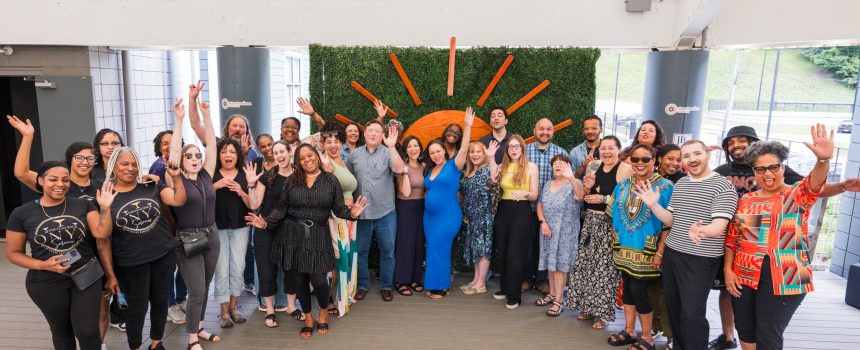
Above: Nonprofit Resilience Program alumni gather for a photo at the 2nd NRP Retreat in June 2024.

Five years ago, the Nonprofit Resilience Program (NRP) was established by The Partnership Network to strengthen the wellbeing of smaller nonprofit organizations and their leaders in the Pittsburgh region. 

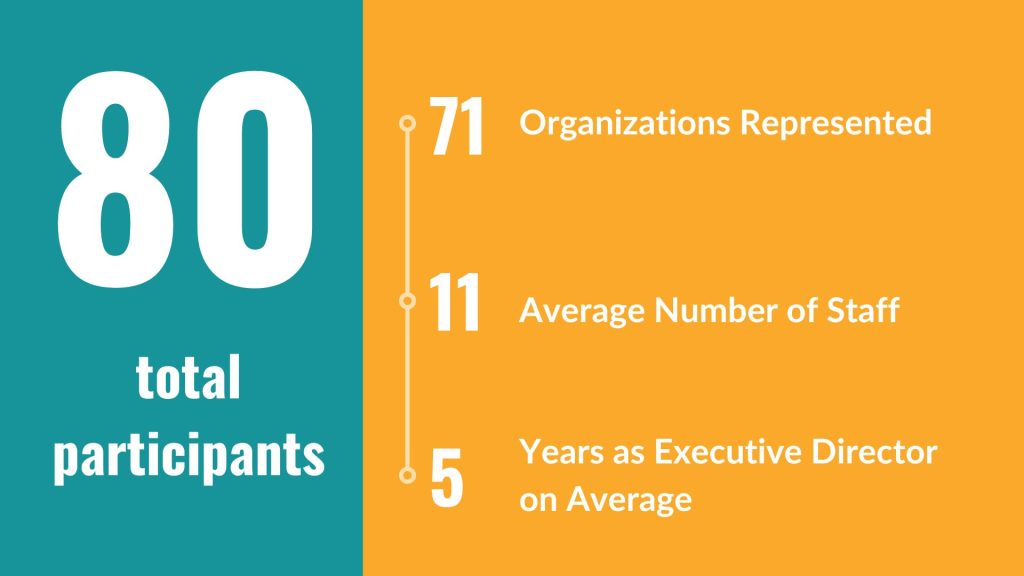
The inaugural cohort launched in September 2020 with 11 participants amidst the peak of the Covid-19 pandemic. Today, nine cohorts and 80 participants have passed through NRP, and leaders continue to benefit from the tools and values established during the three month program. 

“We continue to look at how we’re working as an organization, especially as a nonprofit, and what our satisfaction is with work, home, and life,” said Denele Hughson, executive director of Grow Pittsburgh. “We focus on how we are living a life that leads to satisfaction and not just the idea of balance.”

Hughson joined the first cohort at a pivotal point in her career, as she was transitioning from Grow Pittsburgh’s Director of Farm Education to Executive Director. She entered the program focused on advancing her leadership skills, and how to strengthen her boundary setting and decision making. 

NRP offers one-on-one sessions with executive coaches, which Hughson utilized to reach her goals. It was the first time she had experienced coaching at this level and said it was invaluable to her professional development. Over the life of the program, NRP has provided 120 hours of one-on-one coaching sessions to participants. 

“I had to develop a plan of how to incorporate boundary setting into my leadership and staff, and set limitations on how much we’re giving to every one thing, and the knowledge that sometimes effort is based on your ability to show up and that’s okay,” Hughson said. 

There are three phases to NRP; the first is centered around learning about leaders and their needs, and the following phases are molded to support the individual. Nina Barbuto, executive director of Assemble and a participant in the second cohort, said the structure of the program promotes “intentional care” and “helps build support for folks who take their accountability to the community seriously.”

“There is a lot of perceived power, and a lot of the time, nonprofit leaders might feel powerless to all of the things coming at us [and our] organizations, as well as the community,” Barbuto said. “Supporting their resiliency is important because it strengthens their capacity to show up as accountable people who are learning. Resiliency is saying, ‘I don’t know’ or ‘I need help,’ versus, ‘Let me make a choice that could be harmful.’”

Also in the inaugural cohort was Andrea Matthews. She returned to Pittsburgh in 2019 and re-entered the nonprofit landscape as the Executive Director of The Brashear Association. After being gone a number of years, she said it was “extremely helpful to have an opportunity to sit with other nonprofit leaders who were very steeped in [the sector].”

During the program, Matthew’s executive coach surveyed the staff and board members of The Brashear Association about her leadership skills and the feedback was “eye opening.” 

“I learned things that I still carry with me to this day, like the need to slow down and bring accountability to the table,” Matthews said. “My staff would say, ‘You’re so busy,” but what that meant was that they didn’t feel seen or heard. So I started having one-on-one meetings with them, and they can request [a meeting] whenever they want.”

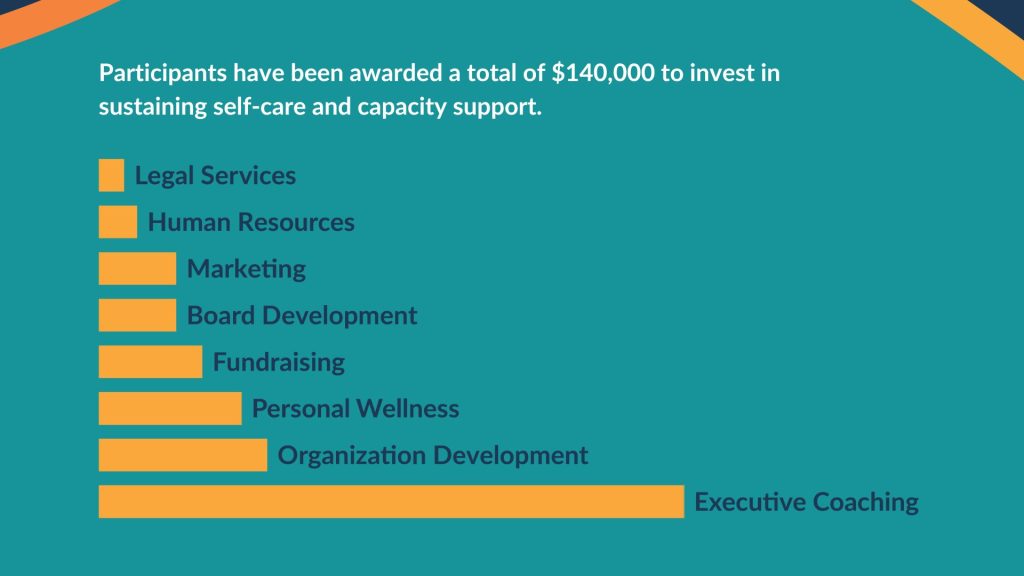
When participants complete NRP, they are awarded $2,000 to invest in sustaining self-care and capacity support. Since 2020, a total of $140,000 has been awarded with the majority of leaders choosing to continue executive coaching. 

Hughson said she believes that without NRP, there are professional connections that she wouldn’t have made otherwise, including her executive coach. 

“This cohort was about figuring out what I needed to be an effective and holistic leader, and just being open to learning more tools and systems that can be brought back and assimilated to my staff and beyond,” Hughson said. 

The program has continued to foster a community of care with the creation of the NRP Alumni Network in 2023. This initiative is driven by alumni and designed to meet the specific needs and preferences of participants, ensuring that the community and its offerings are aligned with the interests and challenges faced by its members.

Two new additions to programming include Community Pop-ups and Relax + Learn Workshops.

The Community Pop-ups aim to connect alumni, team members, and the community at casual, informal events where participants are invited to share what’s on their hearts and minds. In person and outdoors, weather permitting, the pop-ups are an opportunity for alumni to highlight the work they’re doing and get creative with how to promote self-care and well-being.

The Relax + Learn Workshops will be offered in a hybrid format and alumni will lead conversations on important topics that resonate with nonprofit leaders, provide valuable resources, and explore new partnerships and collaborations.

To learn more about upcoming programming or support NRP, email jamie@newsunrising.org

Posted in ProgramsTagged Nonprofit Resilience Program

Investments in Public Health, Revitalized Economy Terminated by EPA

Posted on May 7, 2025 by Alyse Horn

New Sun Rising was notified on Tuesday, May 6, 2025 that the EPA has officially terminated funding for the Green & Healthy Homes Initiative (GHHI) Thriving Communities Grantmaking program. This decision has forced GHHI to cease operations, disrupting the distribution of $500,000 in contractually obligated payments to New Sun Rising, including a $250,000 award to The Mon Water Project. Without this funding, community-led solutions to improve public health and revitalize economies throughout Greater Pittsburgh will suffer. 

GHHI is challenging the EPA’s decision to end this critical work, having already filed a dispute with the EPA and the Federal District Court of Maryland to overturn these decisions. These legal challenges join a national response to the Trump Administration’s wave of attacks on our air, water, land, economy, and nonprofit sector. Of the 141 Executive Orders issued in his first 100 days, many target people working to improve public health, protect the environment, and create economic opportunity in disinvested communities. 

For the past 20 years, New Sun Rising has consistently stood for the fair treatment of all people, communities and their right to live healthy lives with access to opportunity. The termination of this grant not only negatively impacts people’s health, but slows the economy of a region that has long struggled to grow. 

Over the last two decades, every $1 invested in New Sun Rising has generated an additional $8 of economic impact in 47 communities that have historically received the least but need the most. The rescinding of this funding is therefore not only a hit to New Sun Rising’s bottom line, this decision serves to impede an estimated $4,000,000 of economic impact for the region.

Due to the short-sighted action of the EPA, construction jobs for community centers and mixed-use development will be lost, and the small businesses employing them will be hurt. Fewer people will receive the career exposure and training necessary to lift them from poverty and create prosperity for their families. Utility bills will remain higher for the homeowners and community-based organizations who desire energy efficiency improvements and solar production. There will be fewer greenspaces, community gardens, and forests to protect us from flooding and to provide greater access to healthy foods. 

Sadly, the experience of the last several days is part of an ongoing pattern of destructive and inefficient decision making by the current administration. In January, our highly competitive $20 million proposal to catalyze sustainable development with 15 regional partners was similarly terminated by the EPA. What we have experienced this week is not a momentary blip or single data point. It is part of a systematic dismantling of the kind of community organizations, projects, and resources required to protect community health and generate economic revitalization at the grassroots level. 

While New Sun Rising and The Mon Water Project realize that we cannot rely on these federal grants at the present moment, we’re hopeful that legal challenges and the rising voice of our community will help to overturn these unjust decisions. If you agree, we ask that you join us in making it clear that all communities deserve to be vibrant by donating, helping spread the word, and engaging your elected officials and neighbors.

Today, strengthening local communities to lead into the future is more important than ever. In this season of uncertainty and unrest, know that New Sun Rising will continue doing all in its power to advocate for the communities we serve. 

Donate at www.newsunrising.org/ways-to-give

Posted in General Information, Programs

Energy Efficiency Empowerment receives critical support to unlock federal funding

Posted on May 5, 2025 by Alyse Horn

The Heinz Endowments Provided Critical Support to Unfreeze $400,000 Department of Energy Grant

Pittsburgh, PA — Energy Efficiency Empowerment (E3) has successfully secured the release of $400,000 in federal funding that had been unjustly frozen since January 2025. This funding will allow E3 to continue its work improving the energy efficiency of homes in disadvantaged neighborhoods across the Pittsburgh region.

The Heinz Endowments provided critical support through an $88,000 grant, enabling E3 to maintain operations and pursue legal action that ultimately secured the release of funds from the U.S. Department of Energy’s (DOE) Buildings Upgrade Prize Phase 2.

“The grant support received from The Heinz Endowments during the challenging early months of 2025 renewed our hope that we could continue advancing our mission,” said Lucyna de Barbaro, Ph.D., Founding Director of E3. “This vital support not only sustained our current efforts but also enabled us to restructure for a future less reliant on federal funding. We are deeply grateful to The Heinz Endowments for their trust and confidence in our work.”

Fair Shake Environmental Legal Services represented E3 in legal action, with additional support from Congressman Chris Deluzio, Lawyers for Good Government, and the Environmental Protection Network. These collective efforts led to the successful release of funding awarded to New Sun Rising and the E3 team.

Since winning Phase 1 of the Buildings Upgrade Prize in 2023, E3 has completed multiple pilot projects in partnership with nonprofit developers, demonstrating measurable reductions in energy use and utility costs—averaging a 26% improvement per home and saving homeowners approximately $500 annually. Affordable housing development partners include Rebuilding Together Pittsburgh, Hilltop Alliance, City of Bridges CLT, and Pittsburgh Housing Development Corporation, with work taking place in Hazelwood, Braddock, Upper Hill, Beltzhoover, and other neighborhoods.

“There is no better time to improve a home’s energy efficiency than during the rehabilitation process—it is the most cost-effective investment and has a long-lasting impact on utility bills,” said de Barbaro. “We hope that the success we are demonstrating will inspire stakeholders to adopt these improved practices in more affordable housing rehabs throughout the Pittsburgh region.”

In addition, E3’s initiative offers free hot water heat pump upgrades and free energy audits in two participating communities—Sharpsburg and East Hills—through close collaboration with the East Hills Consensus Group and Sharpsburg Neighborhood Organization.

Integrating data-driven analysis, on-the-ground collaboration, and a deep commitment to energy justice, E3 supports nonprofit developers and community partners in identifying scalable, cost-effective solutions to electrification and efficiency challenges in Pittsburgh’s aging housing stock.

The DOE Buildings Upgrade Prize was originally designed to include five phases and run from 2023 to 2028, awarding up to $1.6 million in funding per winning team to support the transformation of existing U.S. buildings into more energy-efficient, clean-energy-ready spaces. However, with the future of the federal program now highly uncertain, E3 is actively restructuring its operations to continue serving the community and housing partners.

About Energy Efficiency Empowerment: Energy Efficiency Empowerment (E3) is a Pittsburgh-based nonprofit initiative dedicated to improving the energy efficiency and long-term affordability of homes in low-to moderate-income communities. Through partnerships with community organizations and nonprofit affordable housing developers, E3 provides energy audits, technical assistance, modeling, and quality assurance to enhance building performance during rehabilitation projects and advance beneficial electrification of water or space heating

###

Posted in ProjectsTagged sustainability

Regional leaders organize to build food sovereignty in Allegheny County

Posted on February 13, 2025 by Alyse Horn

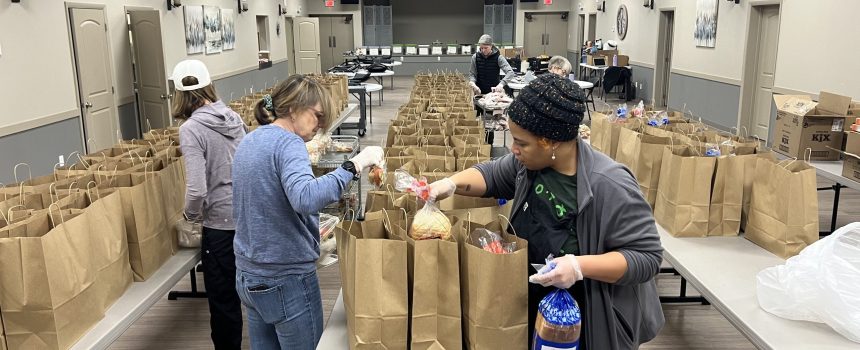
Above: Volunteers with 412 Food Rescue’s Grocery Bagging Program organize donations of fresh, frozen, and non-perishable items from local grocery warehouses to provide nutrition assistance to communities experiencing food insecurity. Photo courtesy of 412 Food Rescue. 

The corner of Danbury and Crispen Streets in Perry South is home to Ballfield Farm, a neighborhood project established in 2008 that turned a long abandoned baseball field into a thriving community garden.

It once provided fresh and locally grown produce to the Charles Street Farm Stand. The market was managed by The Pittsburgh Project from 2009 to 2012 and was an asset to the neighborhood during a time when around 12.5% of Pennsylvanians were experiencing hunger and food insecurity. The garden is still blooming, but the market was forced to close due to capacity restraints.

“If we could bring that back, where we have food from the local garden that we can sell at an affordable price and get kids from The Pittsburgh Project to help grow it, and get the food into their afterschool programming and summer camps. That’s kind of the dream,” said Jo Deming, Perry Hilltop resident and former executive director for Pittsburgh Food Policy Council (PFPC).

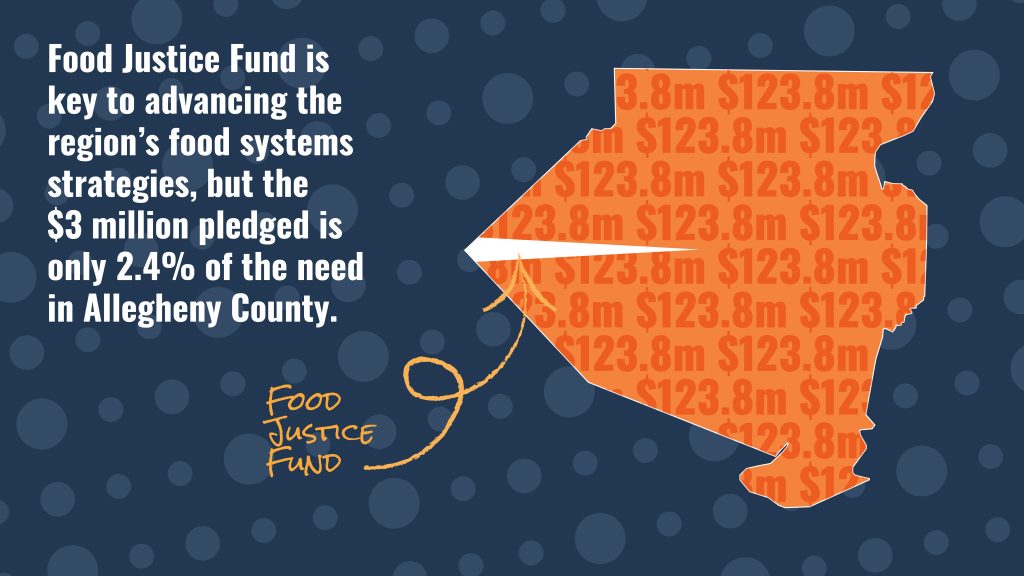
The PFPC has played a pivotal role in advancing the region’s food systems strategies and getting the Food Justice Fund (FJF) approved by City Council in 2023. The $3 million fund aims to build food sovereignty and prioritize investments in grassroots efforts to address food apartheid.

In December 2024, Pittsburgh City Council approved the first round of FJF awards for large-scale investments in the food system, including Grow Pittsburgh, Jasmine Nyree Homes, the Greater Pittsburgh Community Food Bank, and the Just Harvest Education Fund. A total of $1.1 million was awarded. The second round, Grassroots Grants, will open for applications on Monday, March 10, 2025. This year, a total of $1.5 million is available, with grants of up to $75,000 for eligible projects.

The hope, Deming said, is that this funding will be built upon to increase equitable access to opportunities that help people grow, learn about, and eat culturally relevant foods.

“The food apartheid issue has been central to the campaign for the Food Justice Fund committee and really, the idea of food justice acknowledges the structural racism that’s led to our communities being divested in and led to the inequality and inequities in our communities that affect access to food.”

Ending Food Apartheid, Building Food Sovereignty

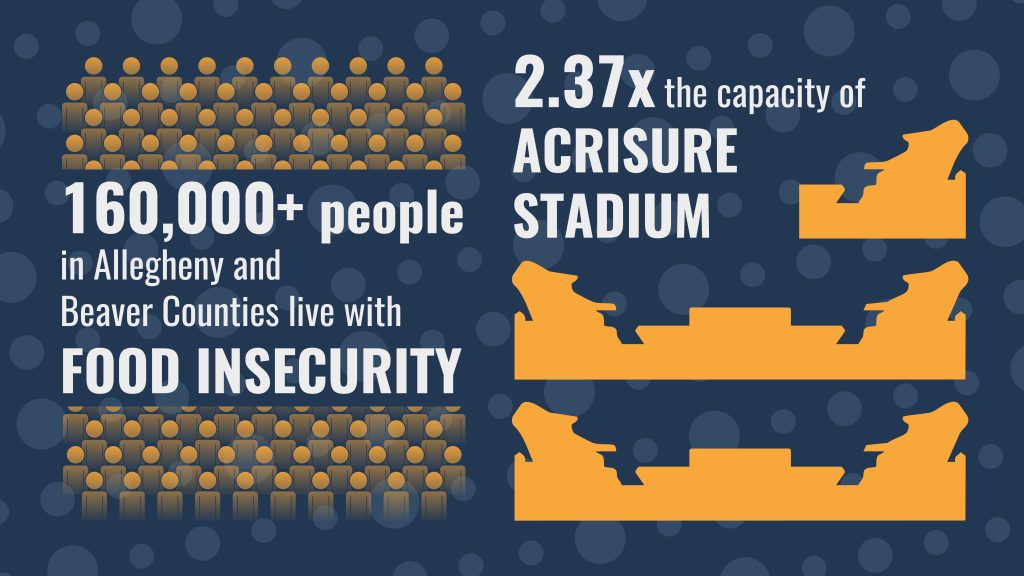
Feeding America reported that in 2022, 11.4% of Allegheny County residents and 12.3% of Beaver County residents were food insecure. In total, that’s over 160,000 people out of the 1.41 million people living in Allegheny and Beaver Counties. To put that in perspective, people who are food insecure would fill 2.37x the capacity of Acrisure Stadium.

This past September, the Greater Pittsburgh Community Food Bank reported that they distributed 48 million meals and 15.7 million pounds of produce from July 2023 to June 2024, an increase from 42 million and 12.5 million the previous year. 

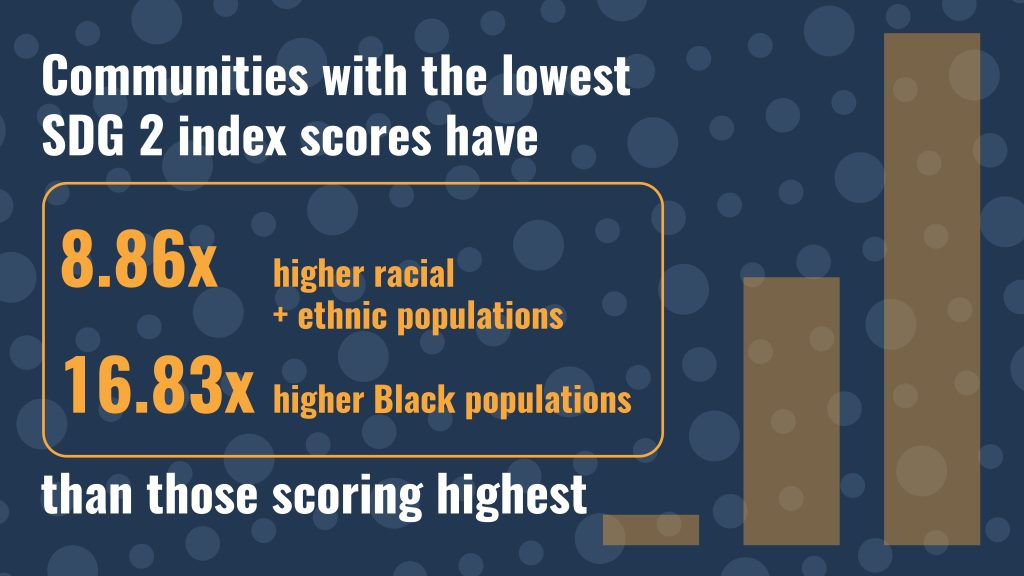
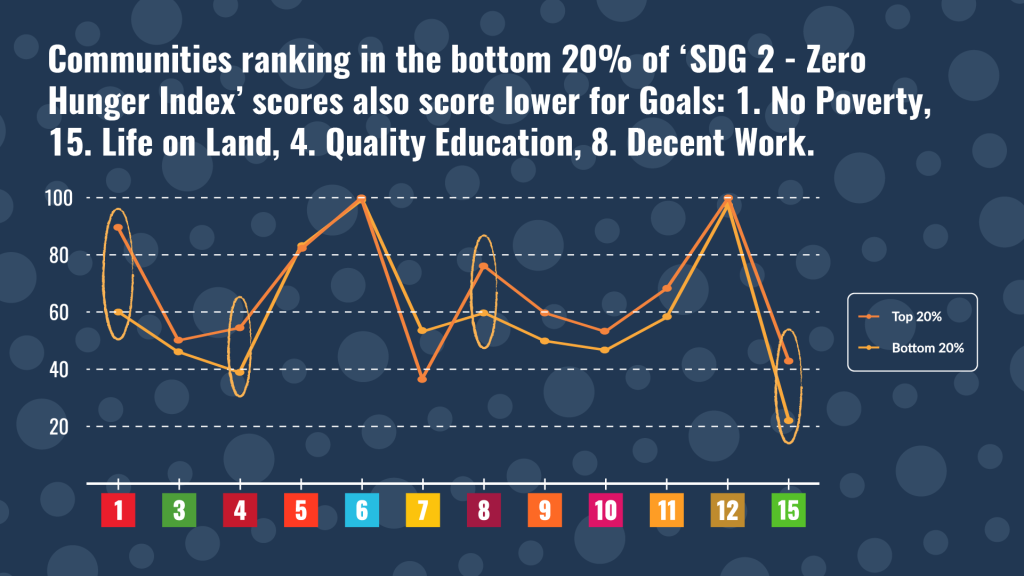
Food security, improved nutrition and sustainable agriculture fall under Sustainable Development Goal 2: Zero Hunger (SDG 2). While analyzing hunger in our region, analysis shows that Southwestern PA communities that fall within the lowest 20% of SDG 2 also rank lower for No Poverty (SDG 1), Life on Land (SDG 15), and Quality Education (SDG 4). Communities with the lowest SDG 2 index scores have 8.9x the racial and ethnic population and 16.8x higher Black populations than those scoring highest.

There are a total of 17 SDG’s, which were created globally as a call to action to raise the quality of life for all people and preserve the future of our planet.

“We deeply believe that food is a right, not a privilege,” said Greg Austin, director of distribution initiatives for 412 Food Rescue. “Pittsburgh topographically and geographically is infamously redlined, and we’re happy to do the work of trying to break those lines down and make food available where it’s not.”

According to their 2023 Impact Report, from 2018 to 2023 the 412 Food Rescue network enabled more than 228,000 people living in high-poverty areas to be within a 15-minute walk of food support. Since their launch in 2015, they’ve redirected 170 million pounds of food that would have otherwise gone to a landfill. Two of 412 Food Rescue’s programs that collect, cook, and redistribute this food, the Good Food Project and Grocery Bagging Program, operate from the Millvale Food + Energy Hub.

When a basic need like food isn’t easily attainable it can become an urgent matter, and if people don’t prioritize that need, their health suffers, Austin said. 

“Different disadvantages can pile up very quickly, and our goal is to free up a community’s strength by allowing them to focus on something other than meeting their basic needs.” 

In the Hilltop, 412 Food Rescue participates in a monthly food distribution program called Fresh Fridays. This initiative by Hilltop Alliance and other organizations provides fresh and dried goods to 350 families from the 15203, 15210, and 15211 zip codes.

Raynise Kelly, who lives and grew up in the area, said the closest grocery stores today are one to two miles away in Carrick, Mt. Washington or the South Side, but she remembers at least three local mom-and-pop stores from her childhood that no longer exist. 

According to data released in December 2024 by the Institute of Local Self-Reliance, the collapse of independent grocery stores can be linked to the government’s decision in 1981 to stop enforcing the Robinson-Patman Act – a critical antitrust law meant to ban price discrimination by suppliers. 

“None of that is in our area now. People literally have to catch two buses to get to Shop & Save or Giant Eagle,” Kelly said. “The people are here, but the food isn’t.”

She and her sister TaRay Kelly opened Soil Sisters Plant Nursery in Allentown in 2020 with the mission “to ensure access to fresh food in communities facing food apartheid.” They focus on providing the resources, knowledge, and accessibility to fresh produce and seedlings to farmers, school gardens, local gardeners, homesteaders, and various organizations. 

Their shop is located at 123 Beltzhoover Ave., but they’re working to expand their footprint in the community. They’ve partnered with the Urban Redevelopment Authority and the Pittsburgh Land Bank to secure four properties, totaling nearly 17,000 square feet, on Beltzhoover Avenue to build an urban farm that will provide gardening education opportunities to residents and a fresh produce market that will accept EBT/SNAP benefits.

Data pulled from New Sun Rising’s Vibrancy Index indicates that 11.9% of residents, approximately 168,000 people, in Allegheny and Beaver Counties receive SNAP benefits. In both counties, 29.7% of residents, approximately 420,000 people, are considered obese. The Food Trust, a Millvale Food + Energy Hub Tenant, is helping to make fresh produce and other healthy food accessible and affordable in Western Pennsylvania through their SNAP incentive “Food Bucks” program.

“If we have healthier food options, we can start to see that food is medicine,” Kelly said. 

She wants to meet the community where they’re at and provide programs that are accessible and “all-encompassing” for residents of any age, but during the warmer months they want to “really focus on the youth” and strengthen their relationship with food. Last summer, she and her sister led an agricultural based summer camp at the Beltzhoover Community Center and shared their plans for the urban farm with the kids.

“We really need them to be at [the farm] to know that it happened, from dreaming it up to making it a real thing, so they know that this is possible,” Kelly said. 

For Deming, she hopes the FJF is an investment in projects and programs like the Soil Sisters “who have been doing the work to make sure our neighbors can eat and understand what nutritious food is, and have opportunities to have businesses where they sell affordable nutritious food that their neighbors can buy.” 

The second round of FJF Grassroots Grants will be available to 501(c)(3) nonprofits with a budget of $500,000 or less, or to individuals and unincorporated groups represented by a fiscal sponsor, and range from $2,000 to $75,000. These grants are not available to for-profit entities, and the city has partnered with New Sun Rising to manage the distribution of the $1.5 million in funding. The City of Pittsburgh will open applications on March 10, 2025 and the deadline to apply is April 14, 2025. Information about upcoming community meetings will be published soon. To sign up for email alerts when applications open, visit: bit.ly/PGHFJF

Edits: This blog was updated on February 28, 2025 to include key application dates for the City of Pittsburgh’s FJF Grassroots Grants. 

Posted in General Information

New Sun Rising launches Virtual Support Center

Posted on February 7, 2025 by Alyse Horn

Created to help nonprofits and social enterprise leaders with AI-driven assistance

Pittsburgh, PA — New Sun Rising is proud to announce the launch of its Virtual Support Center helping community leaders solve real human problems. This innovative platform harnesses the power of artificial intelligence to provide on demand support, making it easier to navigate resources and strengthen organizations.

The Virtual Support Center features three Virtual Assistants that are carefully trained by NSR staff based on specific knowledge, experience, and partner feedback.  Currently in the beta stage of training, the Virtual Assistants are designed to provide personalized assistance in various areas:

  • Sonny offers guidance on NSR’s Programs and Services, helping users create Capacity Building Plans for their nonprofits or social enterprises.
  • Ana specializes in data analysis and communication, assisting users in exploring the Community Voice qualitative data set to enhance grant proposals, communications, and advocacy campaigns.
  • EJAY focuses on Environmental Justice, providing research and insights on issues, policies, practices, and grant opportunities to inform messaging and resource access.

“Our Virtual Support Center is a testament to New Sun Rising’s commitment to leveraging technology for the greater good,” said Scott Wolovich, Executive Director at New Sun Rising. “We know that when community leaders have the information they need, they can work more effectively and make an even greater impact. By integrating AI into our human-centered support services, leaders now have 24/7 access to the tools and resources needed to drive change.”

New Sun Rising recognizes the importance of data security and privacy. The Virtual Support Center utilizes licensed software from Skillbuilder.io, a trusted partner based in Pittsburgh, PA. Their generative AI platform prioritizes data security while optimizing responses through a hybrid approach that balances specialized and generalized models. 

“New Sun Rising is demonstrating the power of hybrid (AI + Human) teaming by managing AI as an extension of their programs” said Adam Paulisick, CEO of SkillBuilder.io.  “Combining the expertise and lived experience of existing leaders in the organization with the always-on nature of AI agents means more people served, at any hour, in any language.  NSR’s ability to train and deploy AI agents that are capable of meeting anyone where they are in conversation to explore programs and services while also creating an easy way for anyone to ask complicated data questions is a model that we see many organizations looking to follow and are excited to continue supporting.”

New Sun Rising is committed to using data in a way that does not harm the people they are trying to help. To get started, users can access the Virtual Support Center and read the Interaction Guide for optimizing chat prompts and completing core tasks. Integrated with New Sun Rising’s Vibrancy Portal community data explorer and organizational data manager, the Virtual Support Center is an extension of New Sun Rising’s Power in Numbers data advocacy initiative. Feedback and suggestions are encouraged to enhance the platform’s effectiveness by emailing info@newsunrising.org.


About New Sun Rising: New Sun Rising supports nonprofits and small businesses to build vibrant communities through culture, sustainability, and opportunity. NSR believes that people and communities hold the knowledge and power to make positive change. We envision a future where regenerative community development practices create the conditions for true social, environmental, and economic justice.

##

Posted in Resources

New Sun Rising celebrates 20th Anniversary in 2025

Posted on January 31, 2025 by Alyse Horn

Above: Each quarter, we’ll highlight one of our impact areas. The first is Culture, followed by Sustainability, Opportunity, and then Vibrancy, which is the umbrella for these three areas. 

It’s hard to believe New Sun Rising has been supporting community-driven development for two decades. 

When we first launched in 2005 as a 501(c)(3), it was out of the love that our founders, brothers Brian and Scott Wolovich, have for Millvale and New Orleans. Our inaugural fundraiser, the Cultural Gumbo, raised money to support flood victims after Hurricane Ivan and Hurricane Katrina devastated these two communities. 

Soon afterwards, a group of residents were fiscally sponsored by New Sun Rising to bring the Millvale Community Library to reality. Another founding project, The Horizon Experience, helped children from urban and suburban neighborhoods build positive relationships and crush stereotypes through shared summer experiences and mentoring. The outcome of these early projects created networks of hope and an undeniable shift in neighborhood perception.

This was during the first decade of our existence, when a volunteer board of directors carried the weight of our early mission to improve social, environmental, and cultural wellness of the Pittsburgh region. Our budget was $1,200 and we were limited to serving only six projects a year. The success of our fiscal sponsorship and mentoring programs during the first 10 years caused us to step back and reflect on a vision for the larger ecosystem we wanted to create. This led to the development of our Vibrant Communities Framework centered around strengthening culture, sustainability, and opportunity in disadvantaged places. After we did this, a lot of things started falling into place. 

In 2014, New Sun Rising received its first proper funding: a $15,000 Small & Simple grant from Neighborhood Allies that stimulated larger investments, including $550,000 from The Henry L. Hillman Foundation and $35,000 from The Pittsburgh Foundation the following year. This funding seeded development programs such as Ignite Workshops and our first two Launch Incubator cohorts, and provided the resources to scale up fiscal sponsorship and implement capacity building to Grow collaborations.

Within the past decade we’ve supported local organizing and power building toward equitable development in 75 communities, and used the practical lessons learned to strengthen over 500 leaders and manage $18+ million since our founding.

The Vibrant Communities Framework emerged as a roadmap to build capacity for community-driven change at three stages of development: Ignite, Launch, and Grow. The 18 strategies are highly adaptive and implemented through local partners to inspire regenerative, wholistic development: built from the bottom up and from the inside out.

We’ve dedicated the last 20 years to the belief that transformational community change requires a commitment to supporting local people to lead and benefit from the future they envision. By unlocking authentic human potential, we’re building an engaged, diverse, and resilient ecosystem with solutions that not only improve your community – but can improve communities around the world.

To celebrate New Sun Rising’s 20th Anniversary, we’ll be taking this year to reflect on our past, how we show up presently for those we serve, and (with your input) envision our future. We’ll be hosting events and publishing more throughout the year on what we’ve learned building Vibrant Communities of wellbeing and prosperity for all. 

If you’re interested in learning more about our 20th Anniversary Campaign events and sponsorship opportunities click here. Consider making an individual donation to honor New Sun Rising two decades of impact here.

Posted in Featured

Posts navigation

Older posts

Categories

  • Events
  • Featured
  • General Information
  • Programs
  • Projects
  • Resources

Archives

Tags

  • culture
  • opportunity
  • sustainability
  • Vibrant Communities
  • Triboro ecodistrict
  • New Sun Rising
  • millvale Ecodistrict
  • One Northside
  • Sharpsburg ecodistrict
  • Vibrancy Funds
  • Etna ecodistrict
  • Ignite Northside
  • equity
  • Power in Numbers
  • vibrancy index
  • covid-19
  • Nonprofit Resilience Program
  • millvale
  • vibrancy portal
  • sustainable development goals
  • EcoDistricts
  • Homewood
  • RiverWise
  • environmental justice
  • Positive Deviants
  • Justice 40 Opportunity Navigator
  • Etna
  • neighborhood allies
  • ignite
  • the partnership network
  • Wilkinsburg
  • grow Sto-Rox
  • Arts Equity Reimagined
  • #Grow
  • Launch Wilkinsburg
  • Impact
  • fiscal sponsorship
  • The Hear Foundation
  • District PGH
  • Ignite Workshops
  • Launch Sto-Rox
  • Collective Action for Re-Imagining
  • mckees rocks
  • launch sustainability
  • Ignite Vibrancy: Collective Impact
  • Larimer
  • The Staunton Farm Foundation
  • Sharpsburg
  • vibrancy awards
  • millvale ecodisrict

Keep up with New Sun Rising

New Sun Rising PO Box 58005
Pittsburgh, PA 15209
 USA

Email:

info@newsunrising.org

New Sun Rising is a GuideStar
Gold Participant

Connect with Us

© 2026 New Sun Rising. All rights reserved.

Website by Imagebox