
Reflecting on Two Transformative Years at Energy Efficiency Empowerment (E3)
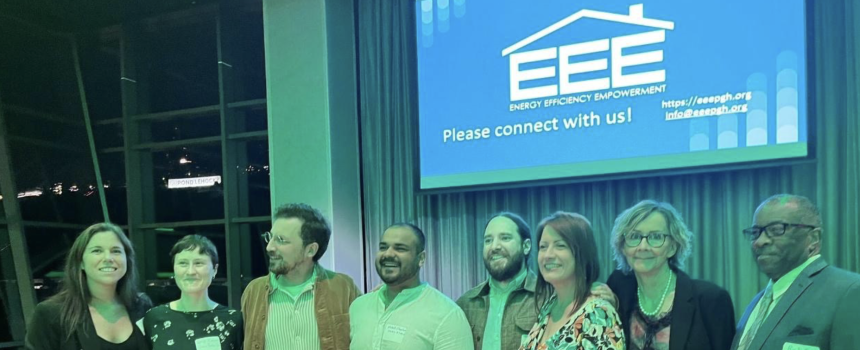
E3 partners, including City of Bridges, Hilltop Alliance, Pittsburgh Housing Development Corporation, Sharpsburg Neighborhood Organization and Rebuilding Together Pittsburgh gather for a photo to Excellence in Sustainability achievements during Energy Efficiency- A win for Affordable Housing on Sept. 25, 2025 at River’s Casino. Partners not pictured include Hazelwood Initiative, East Hill Consensus Group, Mincin Insulation, New Sun Rising, and Rising Tide Partners.
By Lucyna (Lucy) de Barbaro, Ph.D.
Director and Founder of Energy Efficiency Empowerment
In 2022-23, I never envisioned being able to bring almost $1 million in funding to realize the ideas that had been percolating in my mind. I recognized the pressing need for improved energy efficiency in affordable housing rehabilitation—a mission that needed a champion. It’s truly amazing to reflect on how far we’ve come in actualizing part of that quest. As I look back on this journey, I’m filled with gratitude and pride for what we have accomplished together. This retrospective aims to celebrate our achievements, acknowledge the challenges we faced, and share the lessons learned along the way.
Pittsburgh has hundreds of homes in need of rehabilitation. Many are structurally sound but perform poorly from an energy standpoint due to air leakage, insulation gaps, aging systems, and inconsistent construction practices. These homes can become efficient, but without targeted interventions during rehab, the opportunity often slips past. The long-term consequences fall on future residents—who face unnecessarily high utility bills—and on the region, which misses chances to reduce carbon emissions.
To help close this persistent gap, I created Energy Efficiency Empowerment (E3), a small nonprofit fiscally sponsored by New Sun Rising, with a mission to improve homes by sharply reducing the energy needed for heating and cooling—cutting carbon emissions while supporting disadvantaged communities. With the Phase 1 and Phase 2 awards of the Buildings Upgrade Prize from the Department of Energy in 2023 and 2025, we were able to grow, adding two staff members with project management and energy-auditing expertise, and begin the program in earnest.
E3’s nonprofit developer partners, who joined us as members of the E3 Buildings Upgrade Team, are the heavy lifters of home rehabilitation. They fundraise from various sources, select properties, collaborate with communities where the work takes place, and manage the entire rehabilitation process— from procuring architectural and engineering services to managing inspections and interacting with contractors. They also play a crucial role in matching low- to moderate-income families with newly rehabbed homes. This monumental work alleviates some of the pressures surrounding the availability of affordable housing in our region, and E3 considers itself fortunate to partner with these dedicated organizations and individuals.
In the projects where we collaborated, every home was measured and received customized recommendations for enhanced enclosure improvements, equipment decisions, and air-sealing priorities. Beyond reducing energy use, we aim to enhance resilience and comfort, maximize long-term affordability, and protect residents’ health. Our interventions occur at the most cost-effective stage of the rehabilitation process, often filling gaps left by insufficient funding. Whether it’s waterproofing a basement or providing wall and attic insulation, we strive not to leave any stone unturned.
For each home, we model full heating and cooling loads to ensure the selected HVAC equipment is properly matched to the building, which is crucial for both comfort and efficiency. Our approach involves studying the suitability of new technologies, like cold-climate heat pumps, and utilizing the best tools and practices when selecting equipment.
Notably, E3 has developed a custom approach for predicting utility costs when using heat pumps. Both E3 and our partners are equally motivated to keep utility costs low for families while embracing new technology, leading us to scope dual-fuel systems: heat pumps covering approximately 50% of the heating load and the entirety of the cooling load at much better efficiency than traditional equipment.
However, many small details matter— even the shape and size of duct work and its placement within the building can significantly impact efficiency. We thrive on solving these challenges and finding contractors willing to engage in such tinkering to advance our shared goals. We also use the Home Energy Score to create a common performance metric, ensuring that the improvements achieve their intended results. Performance tracking has become a consistent expectation across our partnerships.
In our first two years, E3 has:
- Completed 15 energy-efficiency enhancements in vacant homes undergoing rehabilitation.
- Installed 14 heat pump water heaters in occupied homes across partner communities.
- Conducted 21 energy audits for households seeking lower bills and improved comfort.
- Fixed 2 attics through air sealing and improved insulation—a type of work we are just beginning to scale up.
Across the completed vacant home rehabs, the measured outcomes are compelling:
- E3 provided an average of $15,000 in additional efficiency enhancements to each project.
- These enhancements delivered an additional 27% annual energy savings beyond our partners’ own measures and reductions.
- Combined partner and E3 actions generated approximately $450 in annual utility bill savings for future residents—achieved without increasing sale prices or rents.

As illustrated in our data, when we work together we have systematically lowered the predicted utility costs. These results validate our core premise: with the right methods, a little extra funding, and dedication from all involved, energy efficiency can be consistently embedded within affordable housing rehab. Included in the graph are five all-electric homes with heat pumps covering the entirety of the heating load, where E3 facilitated the installation of solar arrays averaging 3.5 kW to reduce high utility costs by about $800 annually.
With climate change progressing inevitably, we anticipate heavier rains, hotter heat waves, and worsened air quality—impacts that will weigh most heavily on Pittsburgh’s lower- to middle-income populations, particularly those living in areas burdened by industrial pollution and compromised housing. We urge all to recognize the dual duty of climate mitigation (reducing emissions) and adaptation (better air sealing: protection from polluted outdoor air, better insulation: thermal protection, moisture protection, and so on) as we plan how to help everyone thrive in our city.
Partnerships have been the engine of our progress, and we acknowledge and celebrate Rebuilding Together Pittsburgh, City of Bridges CLT, Hilltop Alliance, Pittsburgh Housing Development Corporations, Rising Tide Partners, Hazelwood Initiative, East Hills Consensus Group, Sharpsburg Neighborhood Organization, New Sun Rising and Mincin Insulation.
We also want to acknowledge The Heinz Endowments for stepping in to provide critical grant support after Phase 2 funding from the Buildings Upgrade Prize was unjustly frozen in January 2025. Their support enabled E3 to maintain operations and pursue legal action. Represented by Fair Shake Environmental Legal Services, and additional backing from Congressman Chris Deluzio, Lawyers for Good Government, and the Environmental Protection Network, E3 successfully secured the release of the funding, enabling us to plan more projects in 2026.
After two years of work on home performance improvements, several lessons stand out:
- Efficiency must be integrated early in scope development to avoid missed opportunities.
- Measurement builds credibility—for homeowners, funders, and developers alike.
- Affordability and sustainability can reinforce each other with the right interventions.
- Attention to detail and quality assurance are indispensable for building good rehabilitation practices and eventual scaling.
These insights now shape how we plan, evaluate, and communicate our work. Two years in, E3 has demonstrated that good building science, applied thoughtfully, makes homes more resilient, affordable, and equitable. Our results are measurable; the foundation is strong, but the work ahead—integrating performance into every affordable rehab in the region—remains very ambitious.