Responsive planning, evidence-based learning advance long-term strategic goals
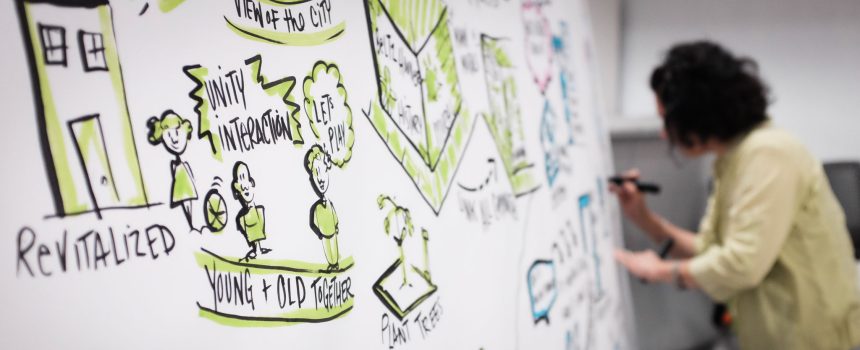
Photo: Storyburgh
Grounded in the belief that communities are dynamic, living systems, New Sun Rising has dedicated the last 20 years to support community leaders with skills, funding, connections, and data to overcome the challenges of our time.
But what does that mean, and how do we guide our approach to accomplish these outcomes?
In 2023, NSR started to develop our Adaptive Strategic Planning Tool. It gives us a quarterly process to review what’s happening now while staying flexible about the best way to reach our long-term goals.
Guided by Michelle Walker, principal at Walker Philanthropic Consulting, we started with a shared vision for the future and asked ourselves, “Twenty years from now, if New Sun Rising were to be totally successful in delivering on our mission, what would that look like?”
Walker said this order of operations is opposite from most strategic planning processes, which tends to start with current data and a variety of tools on how to improve those data points, “but when you can articulate the future, you can more readily chart a past that leads to the preferred outcome.”

In short, we envisioned a future where all communities are vibrant places of culture, sustainability, and opportunity. By serving as a bridge between institutional investment and locally-led development, NSR is helping the transition away from an extractive economy that harms people and the environment, to one where local prosperity and well-being strengthen the quality of life for current and future generations.
“I saw the team really rolling up their sleeves and saying, ‘Well, if this is the future we’re describing, what are the priorities, goals, and objectives that will actually get us to that future? What needs to be tracked and measured?’” Walker said.
Throughout our adaptive strategic plan, we’ve set goals and measures of success, understanding that these metrics may change if we find that they are not supporting our intended outcomes. NSR’s commitment to measurement, evaluation, and learning ensures that activities are evidence-based, informed by those actively doing the work, and contribute to advancing knowledge and innovation for the social sector.
Daniel Rossi-Keen, director at Riverwise and board chair during the initial planning process, said unlike a traditional strategic plan, NSR’s establishes a high-level framework that guides and evaluates our organization’s work while still allowing substantial flexibility for growth, adaptation, and responsiveness to the needs of both NSR and the many organizations we support.
A challenge for NSR, Rossi-Keen said, was that due to NSR’s innovative nature to pursue new projects, partnerships, and processes, we needed to ensure that our planning efforts did not become “unrealistically ambitious or too rigid,” making them misaligned with the organizations’ day-to-day operations.
“Recognizing this, we wanted to be sure that the strategic planning process we undertook was in line with the organization’s culture and future needs,” Rossi-Keen said. “We didn’t want to create a timebound and static plan that would have limited utility for the future. Therefore, we chose an adaptive strategic planning process that balanced both clarity and flexibility.”
The NSR Adaptive Strategic Plan is a living document, and like every initiative, we strive to center social, environmental, and economic well-being at its heart. To read it in full, view the document below.
NSR Adaptive Strategic Plan (2025) (1)

 Step 1: Start with the idea.
 Step 2: Begin drafting your story.
 Step 3: Are we missing anything?
 Step 4: Collaborate!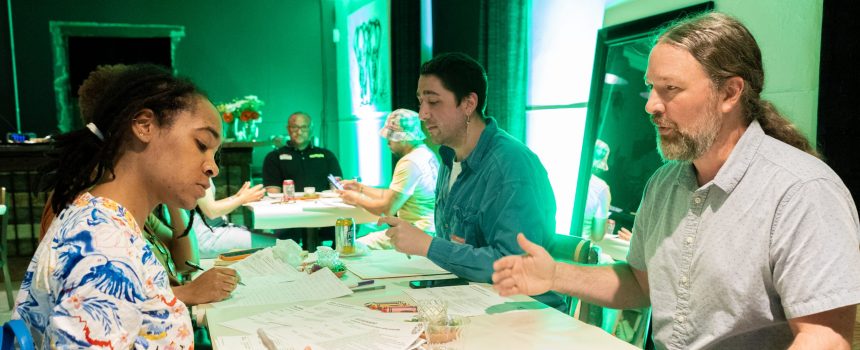

 Zainab has a Bachelor’s Degree in Health Services Administration from the University of Central Florida with her eye on a Master’s Degree in Urban and Regional Planning. Previous to her position with NSR, she gained experience in community outreach with the Broader Impacts Group through AmeriCorps to help coordinate the SpectrUM Discovery Area in the Missoula Public Library and EmPower Place at the Missoula Food Bank and Community Center.